

In honor of Women’s History Month and this being the 100th post of The Golden Girls Fashion Corner, I’ve decided to take a moment and defend Bea Arthur’s service as a member of the Marine Corps Women’s Reserve during World War II.
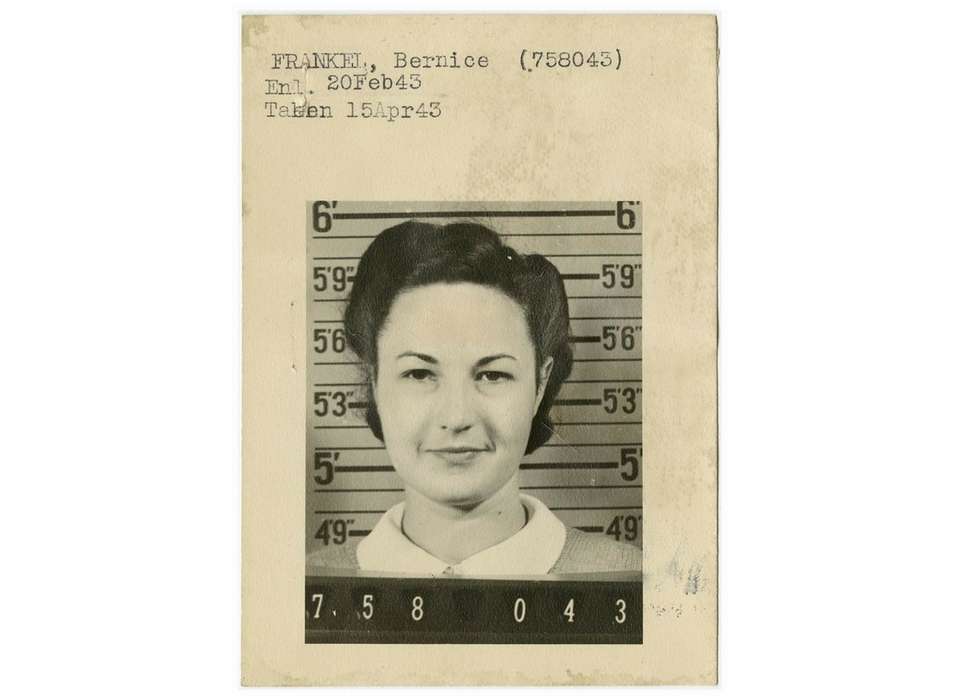
Bea Arthur’s service photo, National Archives
The Women’s Reserve was signed into law by President Roosevelt in 1942, although the Marine Corps delayed its full formation until February of 1943. Bea was among the first groups of women to apply for enlistment at that time. The goal of the Reserve “was to free up officers and men for combat, with women standing in for them at shore stations on the home front.” There were over 200 types of jobs available in the Reserve, although well over half of enlistees were still assigned to clerical roles. Still, many others worked on machinery or were truck drivers, like Bea. No matter their role, the Reserve proved that women had a place in the military beyond only being nurses. Notably, women Reservists were accorded ranks or ratings conistsent with those of men. The program also laid the foundation for women to be included as permanent members across the United States Armed Forces in the years to come. The formation of the Women’s Reserve is such an important moment in history, especially considering that the current Secretary of Defense, Pete Hegseth, has stated that he believes the military has lowered its standards to include women in combat. Go hug a landmine, Pete!
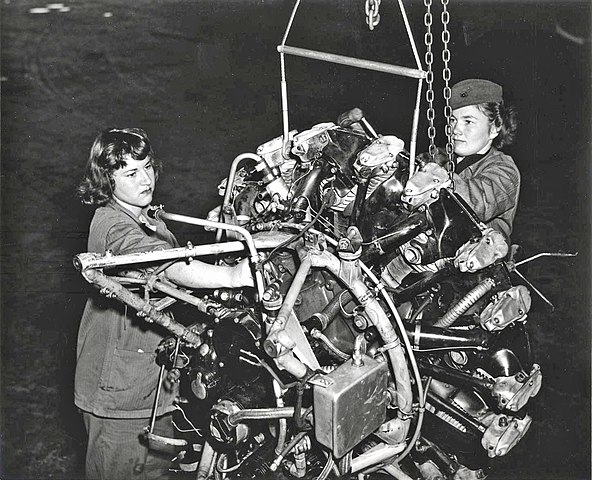

Women’s Reserve Members doing engine repair and assembling a .50 caliber machine gun (Wikipedia)
Recently, Bea was caught up in the anti-DEI directive led by the Trump administration and Hegseth to remove “all outward-facing media of Diversity, Equity, Inclusion, and Accessibility (DEIA) offices” in early January. This meant that the page highlighting her service, appropriately titled “Before Stage and Screen, Bea Arthur Shined as a Marine,” on the Department of Defense’s website along with others highlighting Black war hero and Medal of Honor recipient, Charles C. Rogers, Jackie Robinson, and the Navajo code talkers were taken off the Pentagon’s Department of Defense website due to “errors” with AI tools and search terms used to crawl websites for deletion. A page about the Enola Gay aircraft was also removed. Error pages like the one below appeared instead.

Source: Internet Archive Wayback Machine
It probably goes without saying on here that Golden Girls fans are nothing if not fiercely loyal, and news outlets quickly spread the word that the page about Bea’s service was part of the removal effort:
Trump administration scrubs ‘Golden Girls’ star’s Marine Corps contributions in latest DEI purge (Advocate)
Trump DEI Purge Deletes Page On Golden Girls Icon Bea Arthur’s Military Service (Star Observer)
Web page about iconic Golden Girls actress becomes latest victim of Defense department DEI purge (PinkNews)
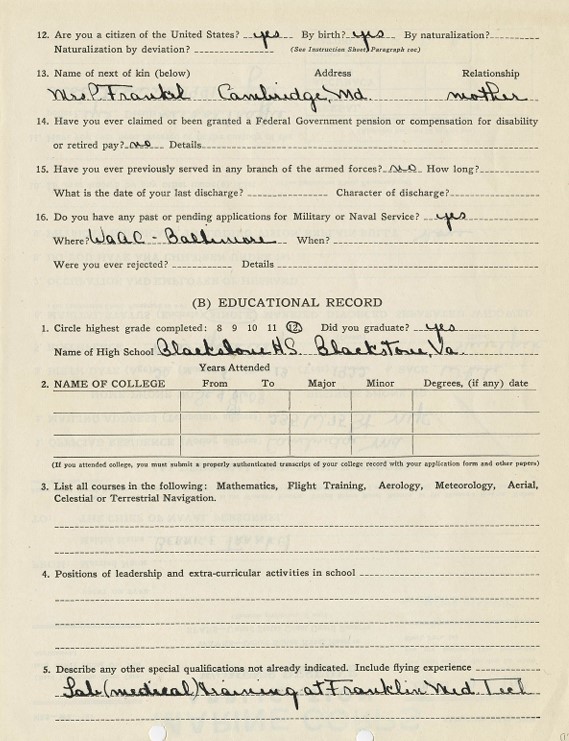
Bea’s page and others were restored following the outcry, albeit with a note stating that they are “part of a historical collection on defense.gov. Some of the information contained within may be outdated and links may not function,” suggesting that the Department of Defense will no longer be actively maintaining these particular sites. It’s worth noting that other organizations, like the National World War II Museum, also have pages about Bea’s service. Naturally, there’s been a ton of confusion and misinformation around this purge, which is one of the goals of fascistic regimes. To be absolutely clear, Bea’s record of service will always stand no matter who’s in office as her Official Military Personnel File is held by the National Archives. You can view the contents of the digitized file for yourself through its online catalog. Note that she applied using her birth name of Bernice Frankel, although she did meet and marry her first husband, Robert Alan Aurthur, while serving in the Reserve. Most of what’s in the file is pretty boring, administrative stuff pertaining to her enlistment, promotion, and requests for transfer, but it does contain her gem of a handwritten personal statement:

“As far as hobbies are concerned, I’ve dabbled in music and dramatics.” Oh, Bea! Her statement is so fitting, though, considering that her time in the Marines obviously played a part in her decision to pursue her dream of being on stage. She was honorably discharged on September 26th, 1945, and a document from her file pertaining to her pension states that she had already enrolled at The New School by May of 1946. In her interview with the Archive of American Television in 2001, Bea recalled the date as 1947. In looking through her military file, I also noticed another discrepancy. Many sources about her life state that she worked as a lab technician after being discharged. In fact, as both her statement and application for the Women’s Reserve shows, she worked in the lab prior to her service in the Women’s Reserve. This tidbit of information is neither here nor there, really, but I do think it shows the significance of this period in Bea’s life, historically. In having the courage to serve her country she also learned a great deal about herself, and thank goodness for that!


Bea was asked about being a Marine in that same interview, which I’ve written about previously in my first All About Bea post. The interviewer asks “How did World War II affect you and your family?” Bea answers quietly, “You know, like everybody else. Traumatic.” Probing for more information, the interviewer then asks, “I had read somewhere that you joined the Marines. Is that true?” With a glint in her eye and an ever so subtle smirk, Bea retorts “Oh, no, no,” before glancing away and quickly changing the subject. This has lead to unanimous reportage that Bea “denied” her military service. Perhaps so, but in watching the interview it’s clear to me that she was just very reticent to discuss this period of her life.
Over the years, Bea also simply wasn’t ever asked about it and, as she was known to be a private person, if it was something she wasn’t keen on talking about then she wouldn’t have otherwise brought it up. In an article from 2021 titled “Bea Arthur’s Marine Corps service ‘evidence of badassery’,” published in Reserve + National Guard Magazine, author Kate Browne noted: “I don’t hear a lot of women of the silent generation or contemporaries of Bea Arthur that would say, ‘Yes, I’m a veteran. I served.’ That’s reserved for men.” Predictably, members of the Women’s Reserve faced a great deal of sexism and resentment from men in the Marines at first, but their accomplishments proved even General Thomas Holcomb, Commandant of the U.S. Marine Corps, wrong. He had initially been opposed to having women serve in the Marine Corps; however, before the end of 1943, he changed his tune, saying: “Like most Marines, when the matter first came up I didn’t believe women could serve any useful purpose in the Marine Corps … Since then I’ve changed my mind.”

Finally, the joke is truly on the Trump administration because even more people are aware now of the achievements of Bea and others. In their haste to pretend that “history is not DEI,” as Pentagon press secretary Sean Parnell said in defending the Department of Defense’s efforts, they have only shown their callous disregard for those who chose to serve and persevered in spite of any obstacles. This is precisely why it is so important to continue to recognize the contributions of underrepresented and marginalized groups. Featuring one person’s achievements doesn’t diminish anyone else’s. On the contrary, it calls attention to the merits of the greater good in the hopes of inspiring future excellence in others. In writing this post I was also reminded of the motto of the United States—E pluribus unum—Out of many, one. History is DEI because it includes all of us. Bea Arthur may not have been one to blow her own vertubenflugen about her military service, but I think she would be pleased that fans of The Golden Girls continue to defend her contribution to the Marine Corps Women’s Reserve and the country as a whole. After all, it’s certainly more than can be said for the current Commander-in-Chief.
 The Golden Girls Fashion Corner