

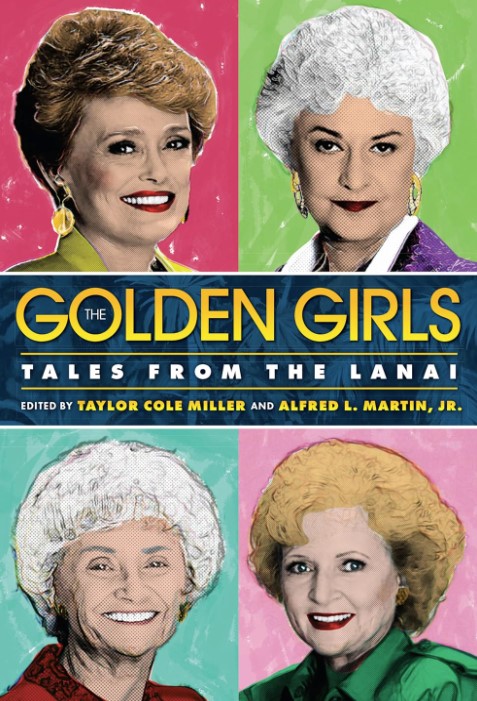
Girls, girls, here it is! No, you don’t see Molly Ringwald sitting here: it’s The Golden Girls: Tales from the Lanai book! Yes, yours truly has a chapter in it that’s a longer take on my “Tattle Tales: Tabloids and The Golden Girls” post, but that’s just one of many fascinating perspectives about the show that are included in this gem of a tome from Rutgers University Press. Trust me when I say that you’ll definitely want to add it to your bookshelf, or my name isn’t Kim Fung Toi! Here’s the official description from the publisher:
The Golden Girls: Tales from the Lanai is an accessible collection that explores the cultural, industrial, and historical impact of that beloved American sitcom. Edited by Taylor Cole Miller and Alfred L. Martin, Jr., this anthology brings together a diverse range of voices that model different media studies approaches to researching and critically analyzing television texts. The Golden Girls reclaims the production history and development of the show, opens new conversations about audiences–especially Black, queer, and female audiences–and provides new insight into the meteoric rise in popularity of The Golden Girls as a 2020s cultural phenomenon. With twelve original chapters and extensive original interviews offering readers rare insights behind the scenes, the book is a long day’s journey into the marinara of The Golden Girls–an immersive, engaging opportunity for readers to learn more about the show. It truly is the golden age of The Golden Girls.
If you enjoy deep dives into every aspect of The Golden Girls, then this is absolutely the book for you! But you don’t have to take my word for it. Taylor made this totes adorbs unboxing video where he spills a little more tea about what you’ll find in the book. I promise you won’t have to take a Dramamine to get through chapter three!
Taylor and Alfred also graciously chatted with me via e-mail to share more about what makes The Golden Girls: Tales from the Lanai just a helluva book!
First thing’s first: tell readers a little bit about yourselves and how your work intersects with your love of The Golden Girls.
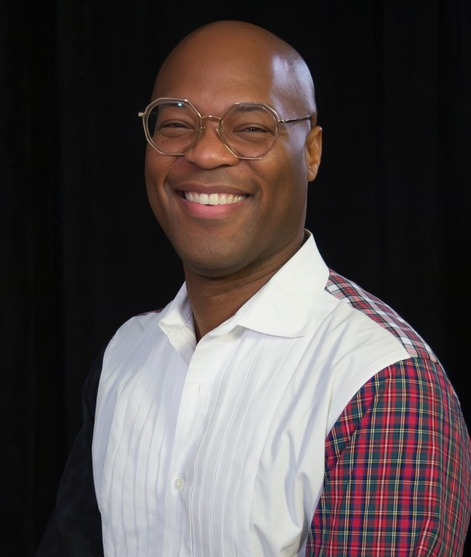
My name is Alfred Martin. I’m associate professor of media studies and Chairperson of the Department of Cinematic Arts at University of Miami. I am old enough to have watched The Golden Girls in its original broadcast run. So, I have loved the series since 1985, although I am certain I did not understand it as a 10 year-old. When Taylor and I met in 2010, we bonded over our love for the series and vowed that we would one day write about it. The Covid-19 pandemic plus the general state of the world resulted in me filtering all my work through joy. It just happened to coincide with a resurgence of interest in the series. But friendship, joy, and timing all came together for this project.
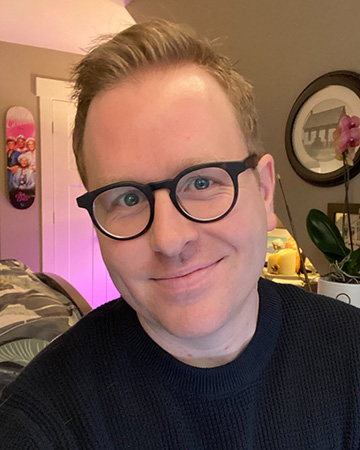
I’m Taylor Cole Miller, assistant professor of media studies at the University of Wisconsin – La Crosse, and The Golden Girls has been a part of a lot of “firsts” in my life, both as a fan and as a scholar. I watched new episodes as a child with my grandmother; its reruns were the salve for my middle and high school miseries. My first existing Facebook post was in a Golden Girls group I created in 2004. In grad school, my first seminar research paper – later my first academic conference presentation – was about The Golden Girls as a gay icon. As it was about television syndication, I wrote a Golden Girls chapter in my dissertation, created a Golden Girls course at the University of Georgia and later at UWL, interviewed Monte Markham (Blanche’s gay brother Clayton) on stage at the first-ever Golden Girls con, and now I’m delighted that a Golden Girls book is my first. And even though we’d both claim to be Dorothy, I’m grateful to get to create this book with the Sophia to my Rose.
The book’s publication is also perfectly timed with the 40th anniversary of the show’s premiere. This question is probably a little bit of a cliche at this point, but what is it for you both personally that still makes The Golden Girls such a relevant show?
Alfred: I think the show continues to be relevant because it remains novel to see older adults (good lord I am close to the age Blanche was supposed to be!) as sexual, vibrant, and funny people. The writers were amazing. The actresses were brilliant. It was like lightning was caught in a bottle and unlike some other really great series from the 1980s and 1990s, The Golden Girls always seemed to both be speaking about the times we were living through and the times yet to come.
Taylor: I’ll give you some Polly Positives but let’s start with the Debbie Downers: The Golden Girls is relevant today because, unfortunately, so many of the issues it tackled remain culturally relevant. I’m never bothered when media “age badly” because that usually means the culture hasn’t. But here in 2025, many of the show’s social issues are unchanged or worse. Age-related discrimination in Hollywood and in the workplace remains rampant; older adults still battle financial insecurity and housing instability; they still struggle with a needlessly complex healthcare and insurance system. Women still face sexual harassment; they experience medical gaslighting, inadequate testing, and diagnostic delays. HIV continues to disproportionately impact marginalized communities, and queer people are still used as strawmen by the political right. Most network sitcoms are still targeted primarily toward a straight, upper-middle-class male audience. And perhaps most telling: older women are still culturally devalued, which might explain why the And Just Like That actors so furiously resisted comparisons to The Golden Girls.
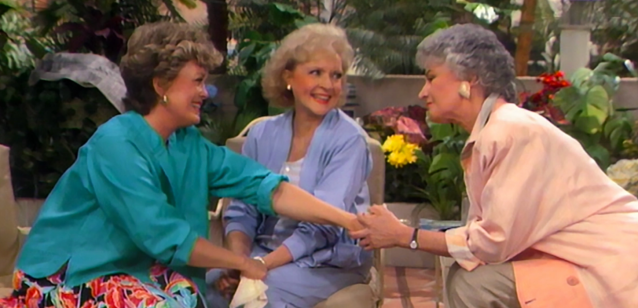
Now for the Polly: the show is funny at a time when we’re in a comedy vacuum. Somehow The Bear is supposed to be our best comedy in 2025. People are hungry for laughs, and our cultural leftovers still taste good, maybe even better? Like food in the fridge, The Golden Girls has had time to “marinate”: the flavors have melded, the molecules have mingled, the spices have bloomed. When nothing sounds good, we can open our televisual tupperware and still enjoy it as a hearty meal. As I’ve aged, the characters, too, feel richer, more layered. The issues seem more relevant. And the opportunities to plug into the vibrant fan community of the show through social media – to find my people – is unlike at any other time in my life. As politics continue to rip families apart, the show also serves as an informative example of the ways in which friendship can become family, and those reconstitutions of community are unfortunately going to become more and more necessary as we, too, become older.
Taylor, your chapter focuses on the syndication of The Golden Girls and fans’ “eat dirt and die, trash attitude” towards the Hallmark Channel during its annual Christmas movie takeover and subsequent suspension of nightly airings of the show. How do you prefer to get your GG fix and why?
Reruns reruns reruns. I like them because I watch the fan groups with them on to see what people say in real time. But let me share my fondest fix. In my first job at a publications company, they made us leave the building for lunch, and almost every day I packed my portable DVD player, drove to Wendys, and watched the series one-by-one with a square burger and a Frosty. Over and over and over again, it became a cherished part of my daily routine. Now, my fix primarily comes in the form of social media clips. So often I’ll wake up with or free-associate a vocal stim from a random episode and eventually start YouTubing clips from the episode before finally heading to Hulu for a screening. For instance, I heard a passerby mention Danny Thomas once, and I couldn’t stop quoting “Isn’t It Romantic?” for like a week. Lesbian, lesbian, … LESBIAN!?
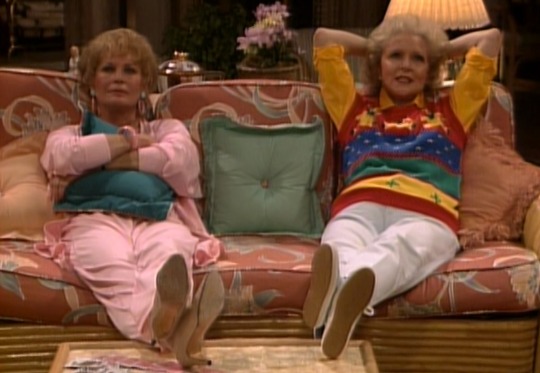
I will also admit to only you – and this is an exclusive – I have a secret Dorothy Zbornak TikTok account I use to troll idiots with her lines. “You really are one chromosome away from being a potato,” “go hug a landmine,” “pray for brains,” and “I could vomit just looking at you” being among my most frequently used.
Alfred, I particularly enjoyed your chapter’s discussion of the “Mixed Blessings” episode that includes an interview with Golden Girls writer, Winifred Hervey-Stallworth, alongside interviews with Black women fans of the show. You argue that The Golden Girls exhibits a deep sense of “Black resonance.” Could you elaborate a bit more on that theory?
In my research, I am interested in thinking beyond representation. That is, the simplistic calculus that suggests Black people need Black representation. So, from a scholarly perspective, I’m interested in thinking about how affect works in the absence of “representation” and how that can be engineered by media industries workers. From a lay perspective, Black resonance is fascinated by what Black folks like and why. What are the things we miss when we focus on, say, Black women’s Beyonce fandom that we might discover with Black women’s Taylor Swift fandom (if that’s even a thing…)? What are the things that are, as Susanna Passonnen suggests, “tuned to the right frequency” such that Black folks’ affective response to it is activated.
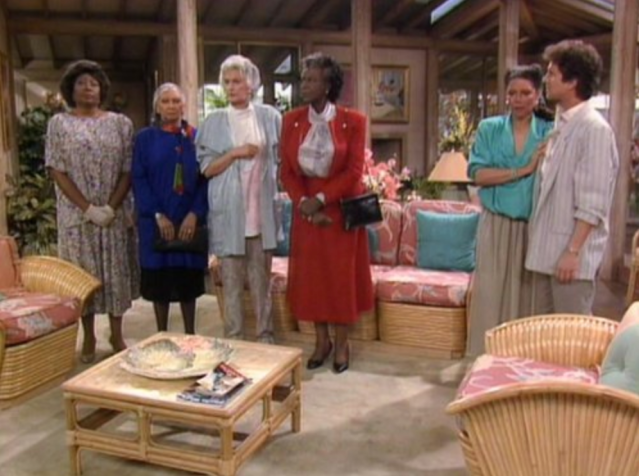
Something that makes this book truly stand out is its original and revealing interviews with the people who helped bring the show to life such as producers Marc Sotkin and Marsha Posner-Williams. How were you able to make that happen?
Taylor: I met Marsha, Wayne, Isabel, Marc, and Cindy backstage at the Golden Con when Monte Markham asked me to be his interviewer for his Q&A. I immediately fell in love with all of them – all mad geniuses I owe so many moments of joy to from the show. I am so happy we are able to share numerous stories from their lives in this book. Among my favorites were Marsha wizarding together the theme song clips and discovering an adult GG coloring book, Wayne helping Bea tune her car radio and doing promotional photos of our Girls, Isabel’s uncanny ability to measure laugh spread and her script work with the ladies, Marc trying to solve the mystery of an alleged poop prankster and killing off Phil, and Cindy’s experience singing the heartbeat ahead of every episode that I still never skip.
I love that the book includes original script pages from “The Way We Met” episode and interviews with Marsha and Isabel Omero (Production Associate/Script Supervisor, Writer) to officially document for posterity that the Great Herring War scene was not improvised. So let’s discuss another great debate: what are your thoughts on the Betty White-Bea Arthur feud?
Alfred: I really haven’t felt like there has been truly credible stories that feel hefty enough to consider it anything other than two co-workers who had different work styles.
(This is the best answer! –Claire)
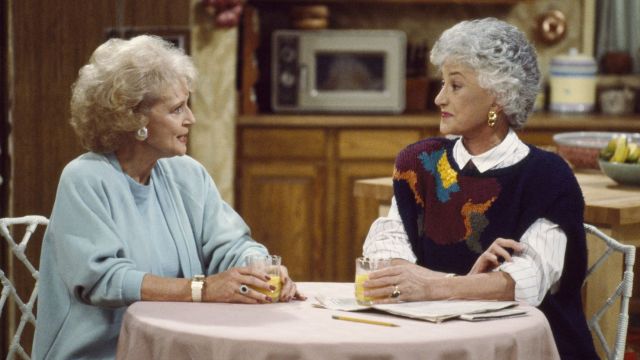
Taylor: I want Ryan Murphy to pick it up for another season of FEUD. No, I’m just kidding. We actually have an interview section about the alleged Feud on page 201 called “On Bea and Betty.” Although there are a couple riotous anecdotes shared there about the women, in sum everyone gushed about how professional these actors were on set. No tiny little Ginsu knives involved!
Finally, of course I have to ask: if you could have any two people, living or dead, to your house for dinner, what would you eat?
Alfred: Bacon!
Taylor: Set the scene, have we been drinking?
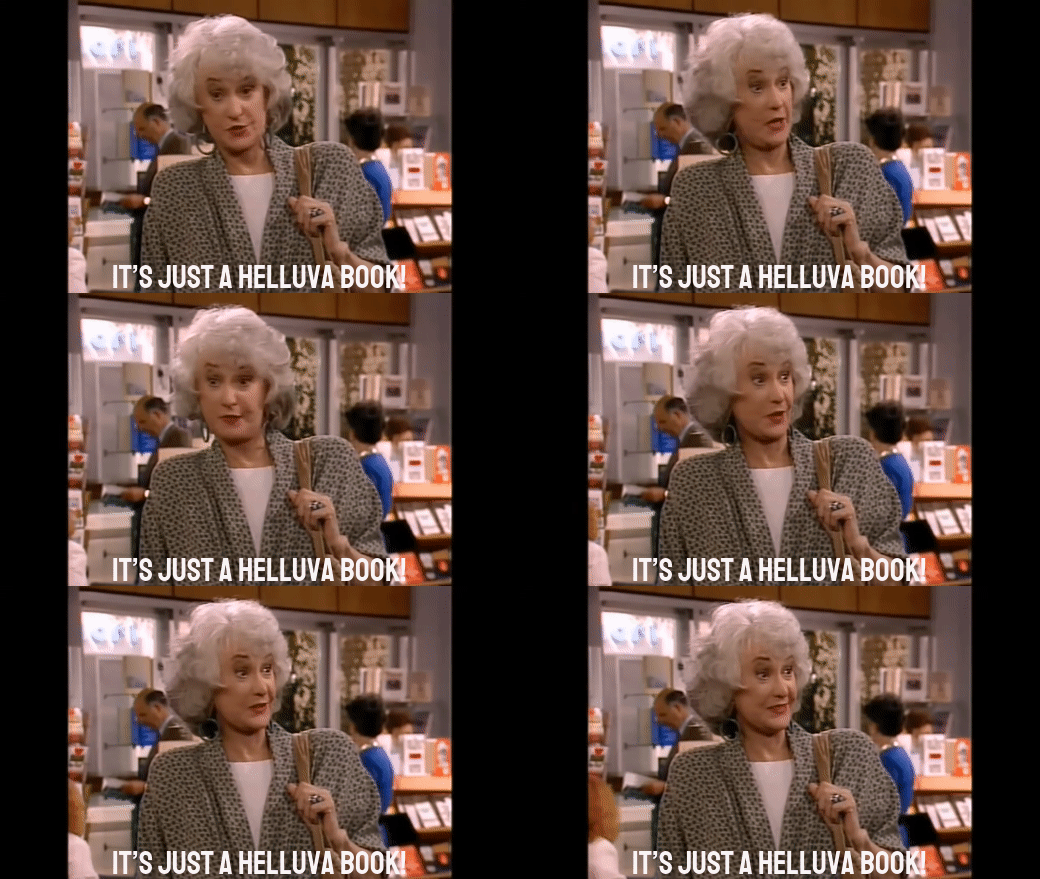
The Golden Girls: Tales from the Lanai will officially be available on September 9th, but you should pre-order it directly from Rutgers University Press now because you can use the code RUP30 to get 30% off! I can’t think of a better way to celebrate the show’s 40th anniversary than with this amazing book, and I especially want to thank Taylor and Alfred for letting me be a part of it. So don’t be a garconanokin and go order yourself a copy of The Golden Girls: Tales from the Lanai today!
 The Golden Girls Fashion Corner
Pingback: Happy 40th Golden Girls-aversary! – The Golden Girls Fashion Corner
Pingback: The 2025 Golden Girls Holiday Gift Guide – The Golden Girls Fashion Corner