

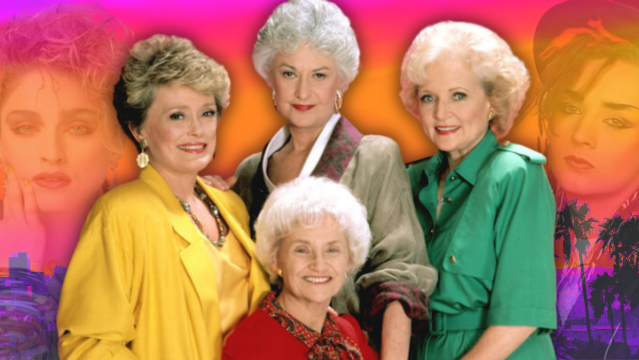
As with fashion, makeup from the 1980s has received much less critical attention than other decades, which is a shame. It’s easy to think of Madonna and Boy George, who are certainly emblematic of the decade’s spirit of excess and experimentation with bright, bold colors, but there’s so much more to consider. If you Google “1980s makeup tutorials” you’ll find tons of creators on TikTok and YouTube doing very costumey looks with an abundance of fluorescent blue eyeshadow and extremely hot pink blush. Alaska Thunderfuck even does a super fun Dorothy Zbornak Transformation. Those are all fun looks that have their place, but in this post I’m going to focus on what makeup was actually like in real life for most women at the time.
Blanche: Rose, what was your first impression of me?
Rose: I thought you wore too much makeup and were a slut. I was wrong. You don’t wear too much makeup!
Dorothy’s New Friend
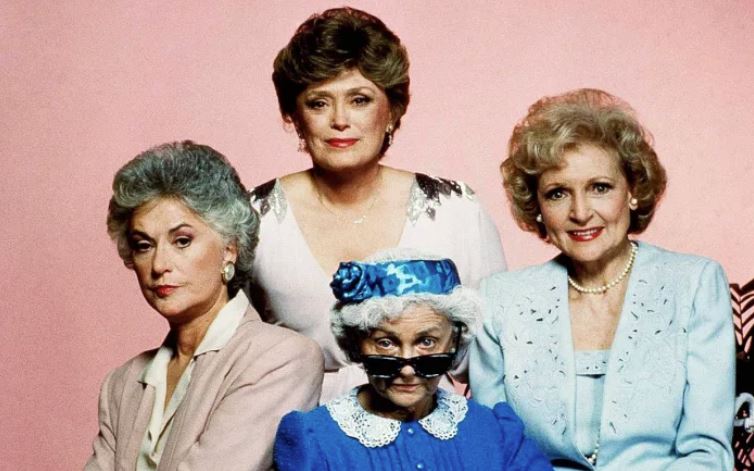
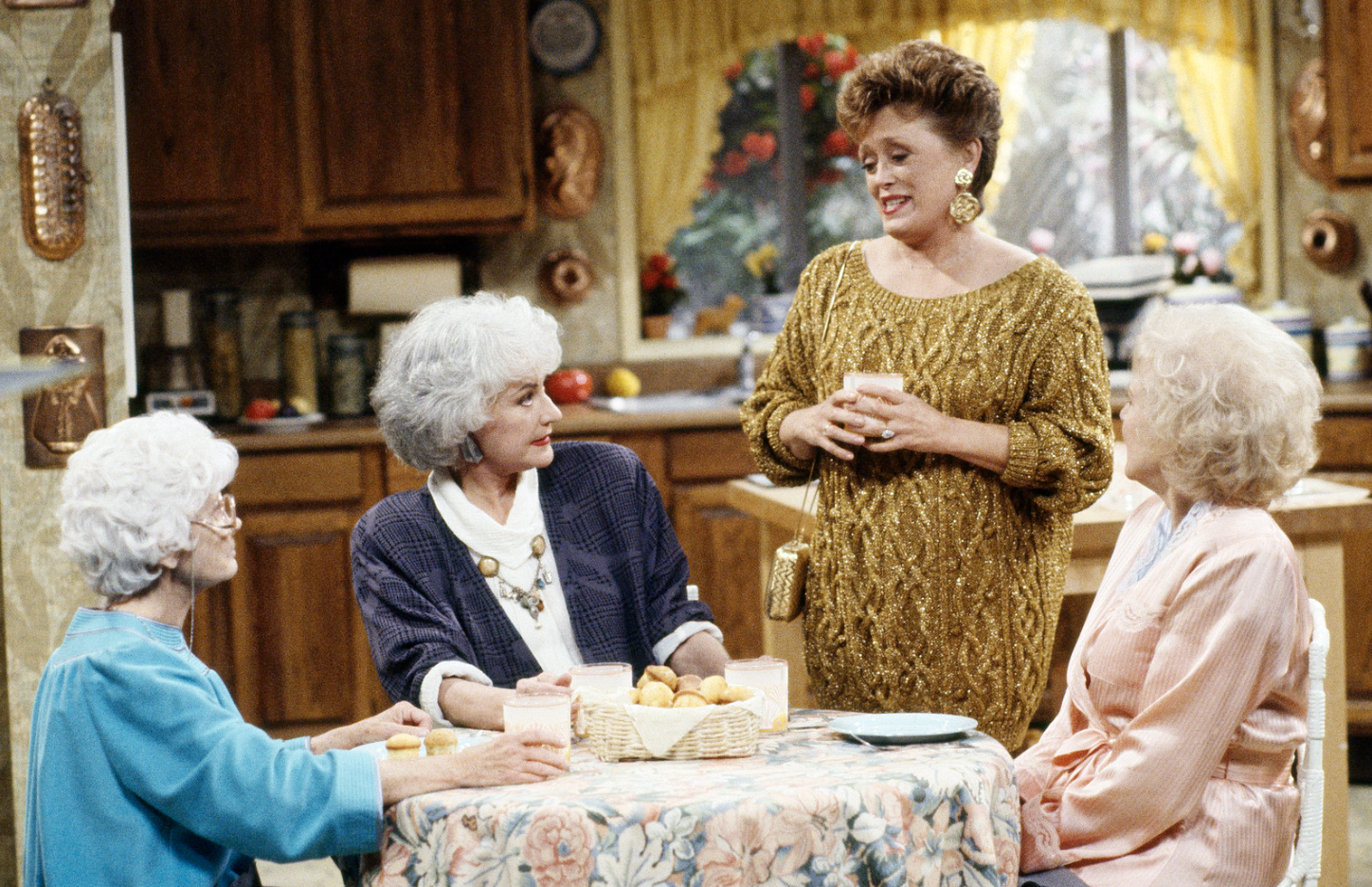
Speaking of transformations, The Golden Girls happens to be a great example of how makeup evolved during the time the show aired from 1985 to 1992. It’s well-known that Estelle Getty was made up to look older as Sophia in the pilot episode since she was actually a year younger than Bea Arthur and, for that matter, didn’t really resemble an 80 year old woman who’d had a stroke and just escaped from a burned down retirement home, either. Fortunately, the character of Sophia was a hit and her makeup became much less harsh in subsequent episodes, although she still required some aging effects (especially considering that she had a facelift between the first and second seasons). By the seventh season of The Golden Girls, all of the women were sporting much softer, more blended looks. In fact, Jim Colucci wrote about how makeup artist Maurice Stein, who was brought in during the first season, invented a waterproof and oil-free foundation that he used to “cover Estelle’s face with several…fast drying [layers]…followed by accentuating her natural wrinkles with a makeup pencil (and, after Estelle’s facelift…creating those lines anew).” Stein’s makeup, Cinema Secrets, is now widely used by makeup artists and is also one of the only brands that’s medically approved for use on “cancer patients and burn survivors…to minimize the appearance of scars and discoloration.” I love that The Golden Girls were a part of that!
Blanche: I am contouring my eyebrows. I use Miss Christie Brinkley as a guide because we have exactly the same bone structure.
Bedtime Story
In 1985, the focus was very much on attempting to achieve a more youthful appearance through an exaggeration of features, primarily the cheekbones. Although the “no-makeup makeup” look has also been around since the 1970s, it didn’t become truly popular until decades later. Still, if the 80s got anything right it was the eyebrows. Thankfully, in recent years we’ve seen a return to the fuller brows that were coveted throughout the decade. As Blanche notes, contouring rather than over plucking is key. After all, you don’t want to look like Wilford Brimley from the nose up.
Christie Brinkley was as ubiquitous in the 1980s as Vanna White, if not moreso. She had a 25-year contract with Cover Girl cosmetics and was in every magazine and on TV, so you can’t really blame Blanche for getting a little brainwashed. Brinkley was at the height of her fame while The Golden Girls was on the air, especially after marrying “that big eyed husband of hers,” Billy Joel, in 1985.
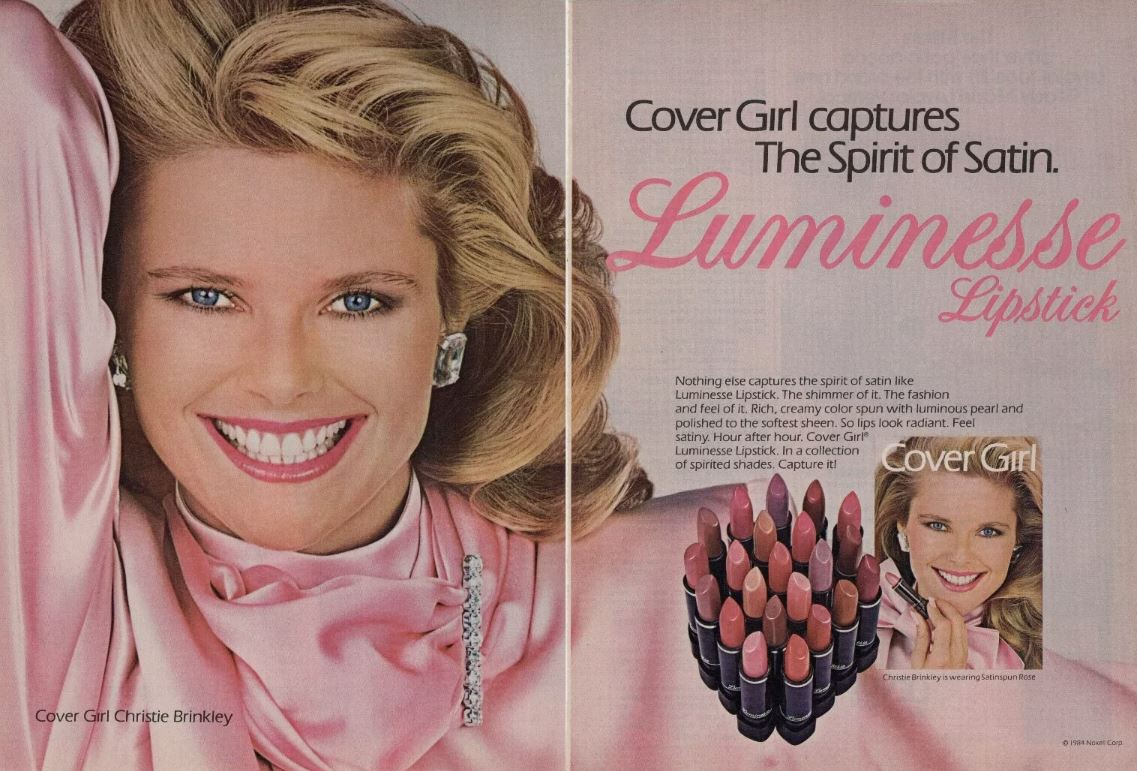
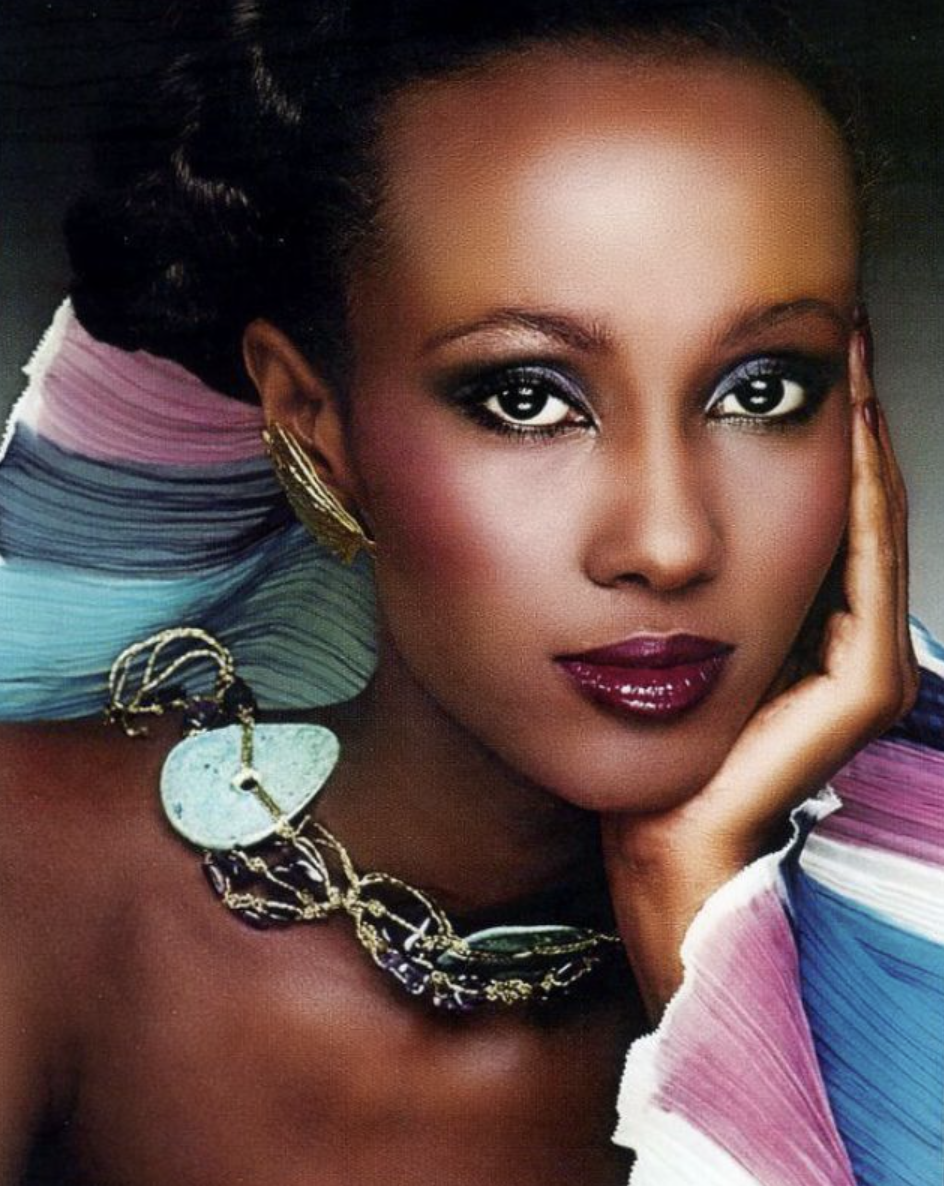
It’s fascinating to note how makeup and fragrance promotion has evolved since the 1980s, when it was associated primarily with fashion models, versus today where it’s almost exclusively marketed by celebrities in the entertainment industry. We have Elizabeth Taylor to thank for that. She released her Passion perfume in 1987 followed by her signature White Diamonds in 1991; however, it was the always stunning Iman who was the first celebrity to create their own makeup line. Iman and Brinkley were part of a coterie of supermodels that dominated fashion on the runway and in print throughout the 80s and into the 90s. The inspiration for this post actually came from some vintage footage of 80s makeup tutorials I found on YouTube. Each is a blast from the past and hilarious in its own way, but they provide a visual record of the products and techniques that were available in the 80s. They also tend to highlight some of the unrealistic beauty standards that we still see today. For instance, in Christie Brinkley’s tutorial we’re meant to learn how to apply foundation from three young women who really don’t need it in the first place, among other tips and tricks.
There was a big focus in the 80s on coordinating your eyeshadow and lip color with your skin’s undertone, whether it was cool, warm, or neutral. Today this principle is mostly used in shade matching for foundation and concealer. Carole Jackson popularized this with her Color Me Beautiful book that just made things even more complicated because now you needed to determine if you were a winter, spring, summer, or autumn to determine the right colors for yourself. Good grief! Popularly known as “getting your colors done,” the process has made a comeback thanks to social media. Overall I feel like we’ve reached an understanding today that anybody can make any color of eyeshadow or lip product work with the right application. It’s the 21st century, and if you like certain colors and they make you feel good then just throw a little glitter on it, honey, and go dancing! Christie Brinkley does share a great tip at the beginning of her video about leaving your skin slightly damp before applying your moisturizer for a “natural finish.” Today skincare is a whole separate industry, but it’s important to note that makeup primer simply didn’t exist in the 80s. Setting sprays for the mass market are also a very recent invention.
Blanche: Well, you don’t get old and lose your appeal the way women do. Look at Mr. Cary Grant. Now he can have any woman he wants, and he’s in his 80s! You just show me a woman in her 50s who can do that, and don’t tell me Joan Collins. That woman belongs in a wax museum!
End of the Curse
Dame Joan Collins is a living legend and an icon who still somehow doesn’t get as much credit as her contemporaries. She is, of course, most well known for playing “super bitch” Alexis Carrington on Dynasty throughout the 80s. Blanche’s joke about a wax museum in the “End of the Curse” episode is a reference to Collins’ seemingly ageless appearance on the prime time soap opera that aired from 1981 to 1989. Yet Collins is one of the few actresses of the era who has never had plastic surgery. She’s 93 now and still looks gorgeous, thanks to her diet, skincare regime, and staying active. Looking at her face today you can absolutely tell, too. Her skin has a natural texture and weight unlike even much younger actresses who have had work done. Of course, good genes, diet, and fantastic bone structure help as well (not to mention money). In 1983 she shared her secrets and advice in The Joan Collins Beauty Book, and amazingly there is a video of her promoting it as she applies her makeup!
Her metamorphosis is just absolutely spellbinding to me! It’s amazing to watch her go from completely barefaced, which we certainly aren’t used to seeing, to the “Dynasty Face” of the screen that is so familiar. She really does a lot with some basic makeup and a very solid technique. I also love that she mentions using paint brushes from the art supply store to apply her makeup because it brings up another good point about makeup application from that time. Brushes specific to the different areas of the face weren’t really in popular use in the 80s except for blush. You were much more likely to see the triangular shaped sponges or flat powder puffs and maybe a lip brush if someone was extra fancy. And everybody had one of those brush and lash comb things that did absolutely nothing. Remember those? Certainly makeup brushes existed, though. Cover Girl sold a line of them called MakeupMates, but they were nowhere near the quality that we’re accustomed to today. The bristles were all black plastic and fairly stiff in a fan shape. Now you can get decent, soft brushes in various shapes and sizes even at discount stores. We also have a ton more options in sponges since the revolutionary egg-shaped Beautyblender hit the shelves in 2003.
Sophia: Just because you put your makeup on with a butter knife doesn’t make you Tammy Bakker!
Three On a Couch
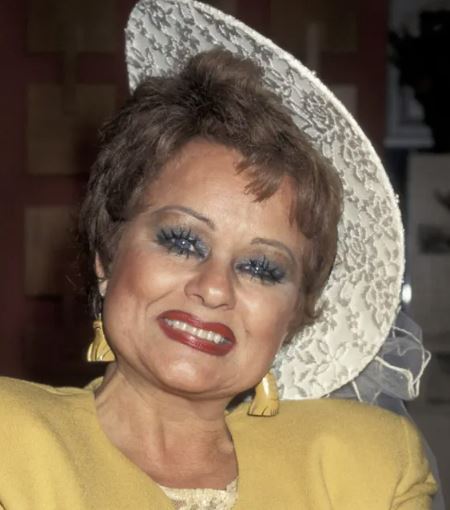
Tammy Bakker is another pop culture figure from the era who was known for her over-the-top makeup which featured plenty of frosty blue eyeshadow, heavy black mascara, and dramatic pink lipstick. Better known as Tammy Faye, she co-founded The PTL Club with her then husband, the recently deceased televangelist Jim Bakker. The two were at the height of their fame at the same time as The Golden Girls aired during the late 80s and, while Jim was disgraced after sex abuse and financial fraud scandals, Tammy Faye remained beloved for her support of the LGBTQ community and compassion towards AIDS patients when their contemporaries chose to preach homophobia. Like Tammy Faye, Blanche was a complicated woman, and makeup often serves as both a literal and figurative mask for one’s inner struggles. Blanche took a fair amount of ribbing from all of the Girls about her makeup, usually in relation to her libidinous dating habits. Still, I think the makeup on The Golden Girls serves as one more aspect of the show that’s helped it stand the test of time compared to other shows of the era.
Today’s 1980s makeup tutorials are all about creating very stereotypical looks using products that are currently available, which are far and way of much better quality than what was available in the past. So now let’s travel down the road of vintage makeup to get a clearer picture of what women like Dorothy, Rose, Blanche, and Sophia had to work with.
Eyeshadow
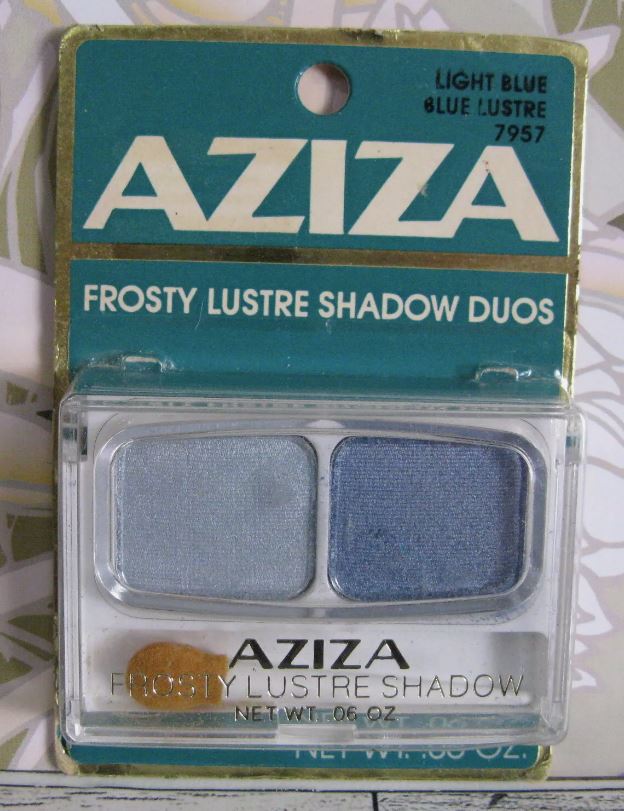
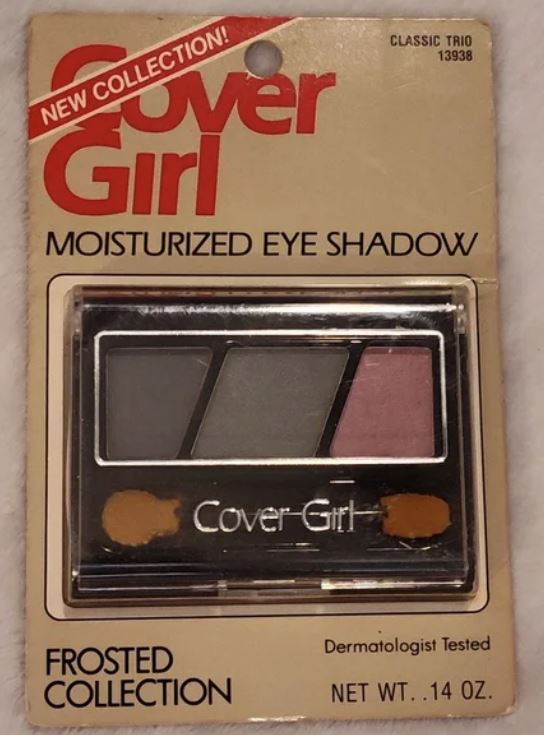
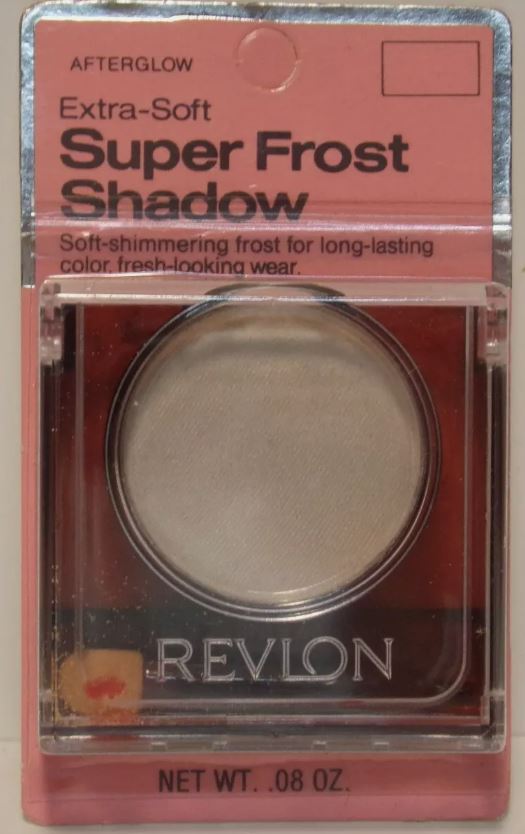
Of course everyone associates blue eyeshadow with the 80s and, while it was certainly a thing, the average woman wasn’t walking around looking like a pop star on a normal day. There were other options. Shades of gray and purple, which Dorothy often wore, were very popular, but the biggest trend by far was shimmer and frost finishes. These first had a resurgence in the 90s and early 2000s with the look trending again today. The “frosty lustre” of the 80s, though, was something altogether different. Maybe it was a way to try and heighten colors since everything was talc based and pigments often left a lot to be desired. If you were born post-2000 it’s really hard to convey just how powdery most makeup was for so many years. Basically, imagine trying to apply baby powder or corn starch to your eyelids via a tiny foam pad on the end of a plastic stick. This was often why, as in the magazine ad below, even when colors appeared bright in the pan they tended to have a much subtler effect on the skin. Even some of the cheapest makeup you can buy today is more pigmented than drugstore eyeshadow was in the 80s. Oh, and those neon colors favored by pop stars? Those were almost always achieved with stage makeup from professional companies like Kryolan, Ben Nye, and Mehron that are still staples of makeup artists’ (and drag queens) kits. Maybelline did have a palette in their Blooming Colors line of eyeshadow called “Rockin’ Yellow,” but the four shades paled in comparison to what is stereotypically associated with the decade. Overall, cool toned colors reigned supreme in the 80s, marking a shift away from the warmer, golden shades of disco and the 1970s “me decade.”
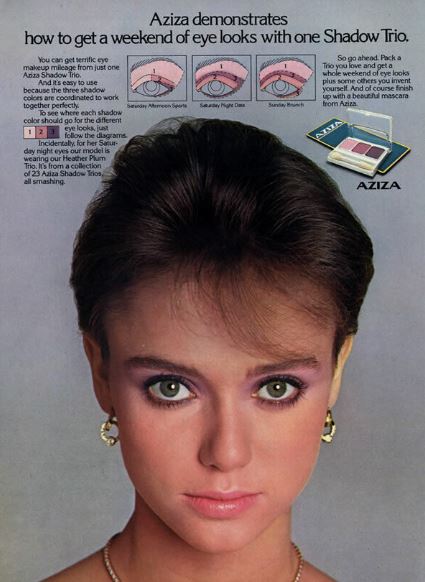
Shadow quads and trios were also huge in the 80s. Again, obviously there was no social media then, so eyeshadow palettes and magazine ads provided an approachable way for women to achieve a variety of styles with their makeup. Aziza is a brand that I always associate with the 80s, probably because my mom used it a lot. Their eyeshadows also had some really fun art deco style packaging with silvery accents that made it stand out against other brands. Aziza was the first company to bring hypoallergenic eye makeup to the market, too. Thankfully, most eyeshadows today don’t even come with those annoying little applicators because they never blend very well, and companies know we’re just going to use our own brushes anyway.
Foundation
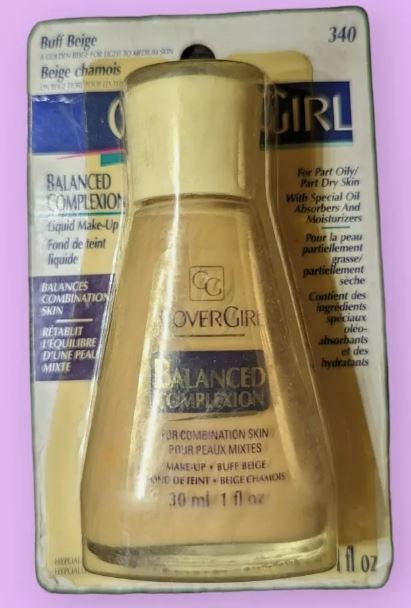
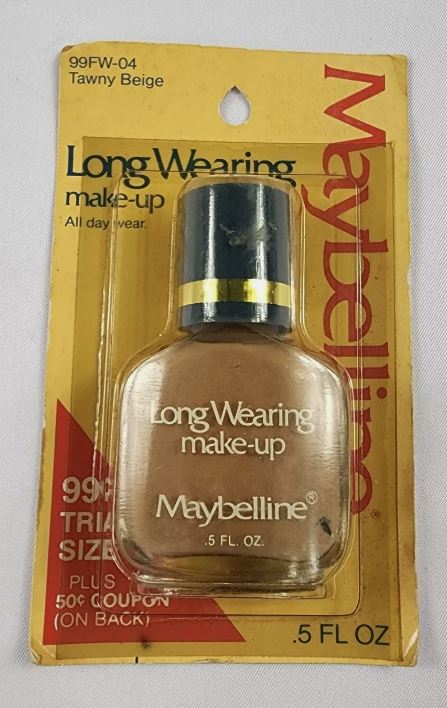
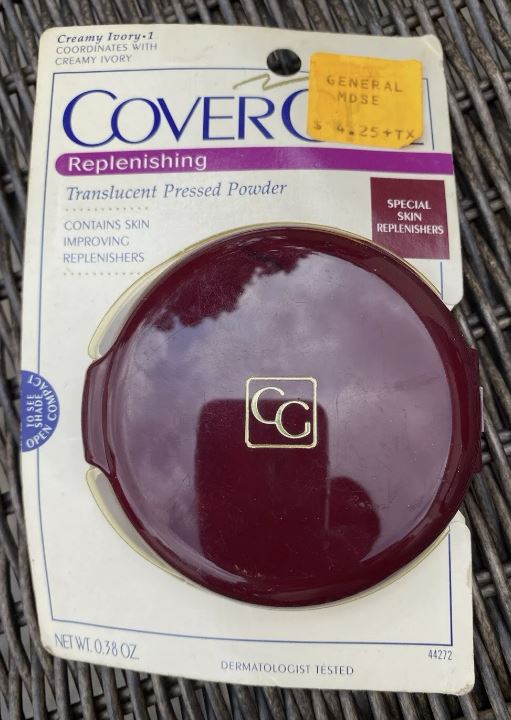
There’s no sugarcoating it: foundation options in the 1980s and even into the 90s were absolutely bleak. We should all thank our fairy godmothers for everything we have now in terms of color, ingredients, and application variety! Formulations have come such a long way. The overall look of the 80s face was very soft, very matte, and extremely powdery, which unfortunately doesn’t work well on mature skin. Everything was also very beige in the 80s. Buff beige, tawny beige, soft beige. So. Much. Beige. In the 80s it seemed that most manufacturers thought that everyone was either some ambiguous shade of beige or ivory. Cover Girl even had a “true beige” shade. Barbara, please! Make it make sense! One of the reasons why Iman’s makeup line was so groundbreaking was because she focused on difficult-to-find shades, especially for women of color who were extremely underrepresented in the cosmetics industry. As in Brinkley’s tutorial, foundation was often called “base,” which is a term that’s sort of fallen out of fashion now. Pressed powder compacts are also much less popular today than loose powder which is used most often in translucent shades to set makeup in strategic areas of the face rather than dusted all over.
Blush and Lipstick
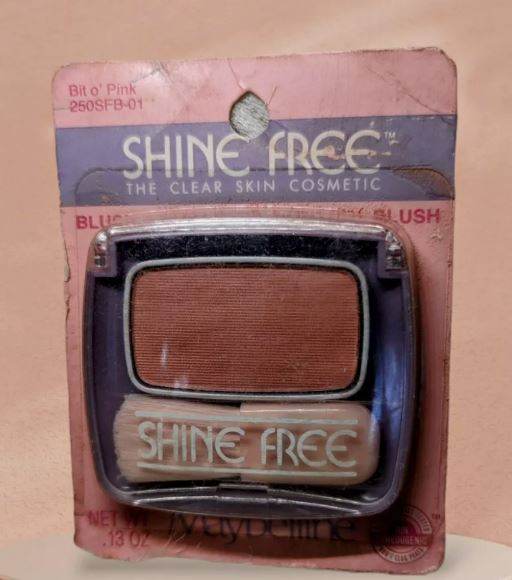
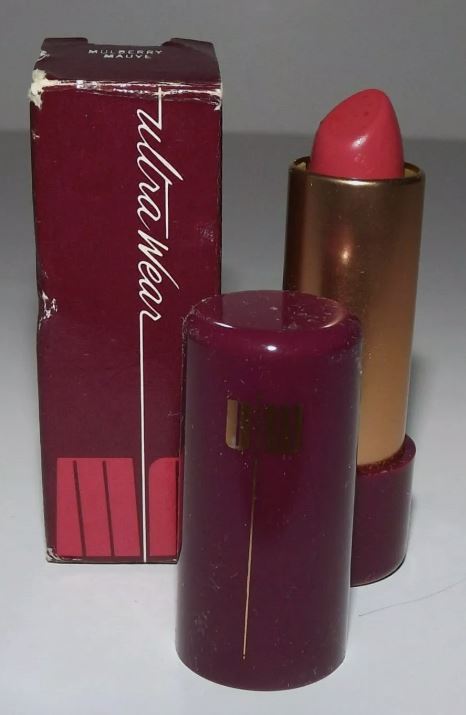
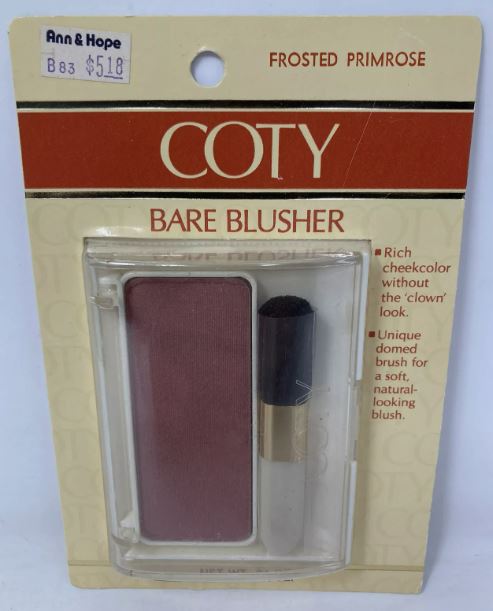
Often called “blusher,” the trick to applying blush in the 80s was to place your pointer and middle fingers at an angle in the hollow of your cheek and then cut in the the powder all the way back to your upper ear. There was no other way, baby! Your cheekbones simply did not exist if you didn’t apply your blush like that. Just look at all of the Girls’ faces in the pilot episode, and you’ll see exactly what I mean. Please note the hilarious description on the Coty packaging above that promises “rich cheekcolor without the clown look.” The lips were also the only place on the face where any sort of shininess was allowed. Blanche may have hated the color magenta, but it’s another shade that’s synonymous with the 80s. The Avon Ultra Wear lipstick above in Mulberry Mauve is a good example of the types of colors that were favored by The Golden Girls and popular with women in general. I also think of Revlon’s Cherries In the Snow, which is a bolder, almost fuschia shade. It’s been around since 1932 as nail polish, and was launched as a lipstick in 1953. Revlon still has the largest range of lipstick colors available in the drugstore, and you can find many of the same or very similar shades that were popular in the 80s along with frosty finishes, now usually called “shimmer” or “pearl.”
Dorothy: I think if it makes you feel better to look better, there’s nothing wrong with it.
Rose: Then I guess it’s just that looking good isn’t that important to me.
Dorothy: Oh, come on. What are you talking about, Rose? You wear makeup. You have your nails done. You even color your hair.
Rose: This is my hair’s natural color…
Whose Face Is This, Anyway?
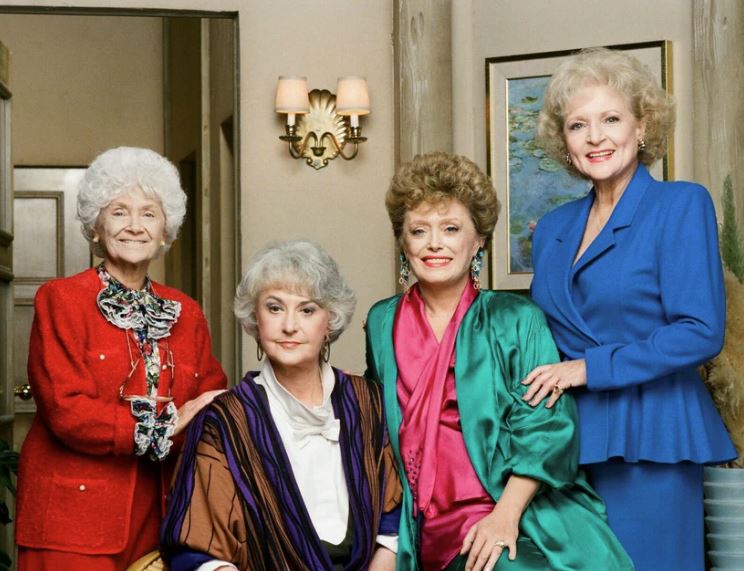
Today, as on The Golden Girls, the topics of makeup and plastic surgery are intertwined—from Rue McClanahan’s second season, Emmy award-winning turn in the “End of the Curse” episode and “Whose Face Is This, Anyway?” later that same season to the procedures the cast members had in real life. Bea Arthur had a breast reduction after her time on Maude, and in fact there was a whole two-part episode about facelifts in the second season of that show, too. In the scene above, Dorothy admits to having had work done on her eyes after Blanche makes a collage of famous women’s features to take to her appointment with a plastic surgeon. This time it’s “Linda Evans’ eyes and Lena Horne’s cheekbones and Cheryl Tiegs’ nose and Carol Burnett’s chin.” I love that Dorothy is the surprising voice of reason there when Rose claims not to care about making herself look good.
The topic of plastic surgery has long been a favorite of the tabloids that love to criticize women for aging while blasting them just as much, if not more, when they appear to look younger. These days anyone with a smartphone can make videos that endlessly speculate on who’s had what done. Just like with makeup, it’s a fine line between between looking “natural” and overdone, especially when you add in fillers and injectibles. Of course, women are judged no matter the results. I happen to agree with Dorothy that if it makes you feel better to look better then there’s nothing wrong with it. Even Maude’s husband, Walter, agreed that the important thing is that it’s your choice.
Beauty standards never stay the same for long, as we can see in memes comparing today’s celebrities like JLo and Blanche that highlight how the perception of aging has changed over time. The conversations on The Golden Girls about appearances and getting older make us laugh, but they’re also important reminders of the show’s continued relevance in today’s image driven world. And just remember: if makeup and plastic surgery aren’t your thing you’ll always have a place on the the internationally renowned Scandinavian dance team of Step and Fetchik.

